
A map called the “Outskirts of Huế” initially sounds like rice fields, canals and battles outside the city gates. But in February 1968, Huế itself became the scene of one of the longest and toughest city battles of the Vietnam War.
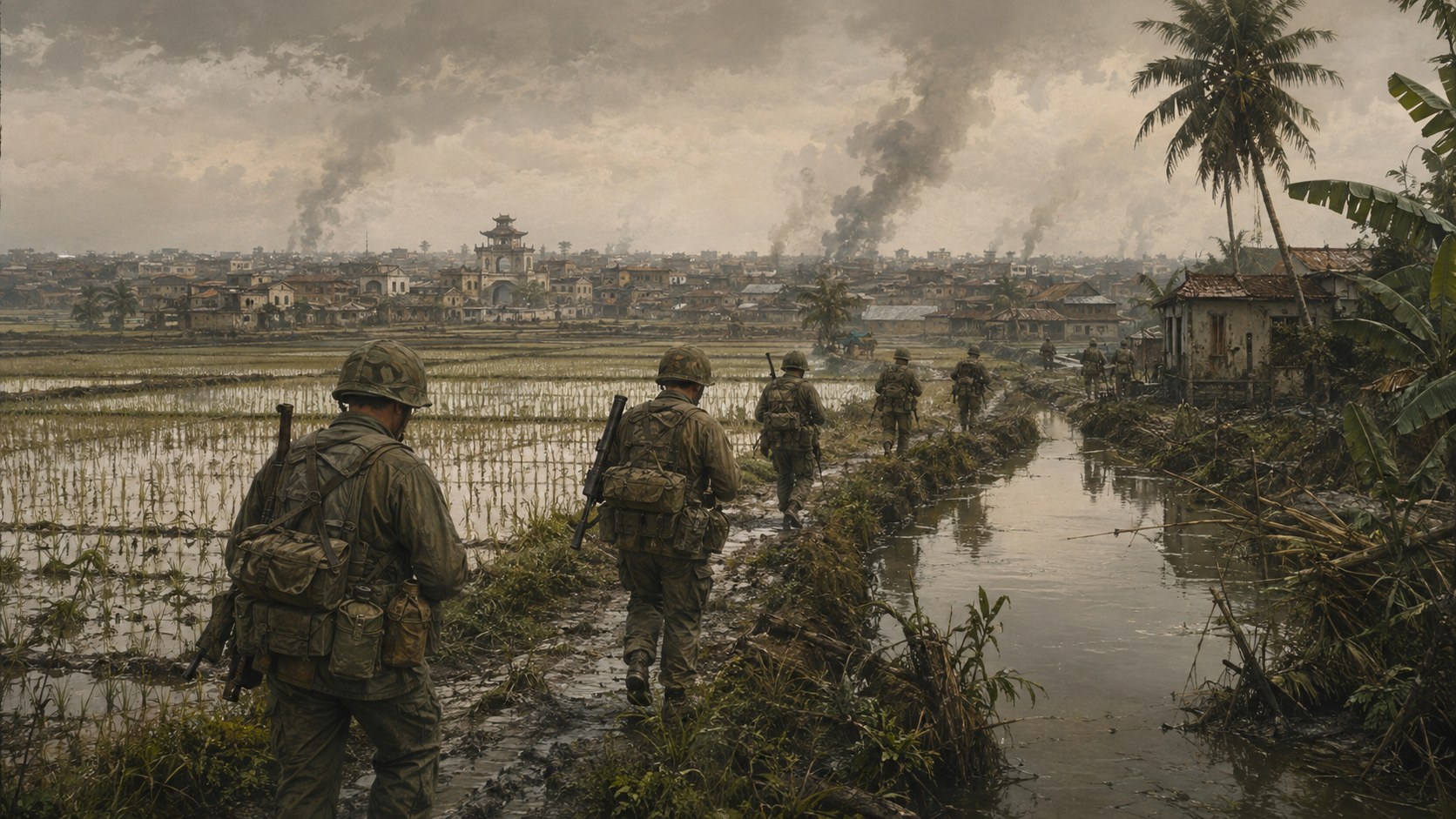
In Hell Let Loose: Vietnam leads “Huế Outskirts” through terrace fields, dense vegetation, fortified bases, industrial plants and watercourses. The Official card description emphasizes precisely this transition between rural surroundings and militarily developed positions. Historically, this is a clever perspective: the battle was not only decided in the streets of the imperial city, but also on the driveways, in villages and rice fields around Huế.
In short: The playing card is not a reconstruction of the citadel. It condenses the landscape and the military accesses around Huế into a playable arena.
Warum Hue so wichtig war
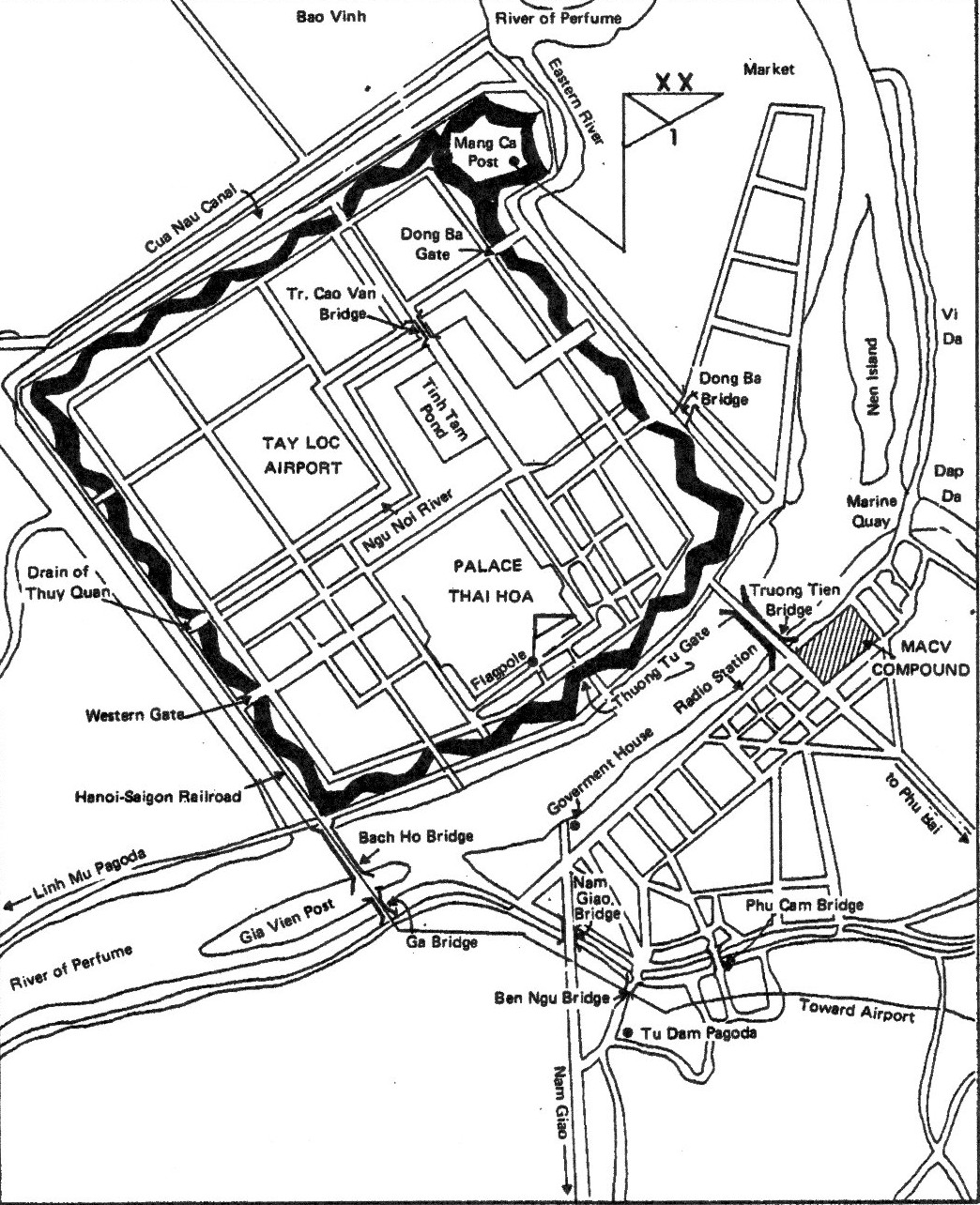
Huế was much more than any provincial city in 1968. As a former capital of the Nguyễn dynasty, it had enormous cultural and symbolic significance. The perfume river divided the city into two very different rooms: in the north was the citadel with the old imperial city, which was protected by walls and ditches. South of the river were modern residential neighborhoods, administrative buildings, hotels and the American MACV consulting complex.
Then there was the strategic situation. Highway 1 ran through Huế and connected the American bases in the Đà Nẵng area with the demilitarized zone further north. Whoever controlled the city threatened supplies, communications and the political authority of South Vietnam in an entire region.
The surprise attack of the Tet offensive
In the night of 30. to the 31. January 1968 began the Tết offensive. During the Vietnamese New Year, North Vietnamese National Liberation Front units and units attacked targets throughout South Vietnam. For Huế they had gathered strong forces: A historical study of the US Army reconstructed fourteen battalions for the first attack alone.
The advance hit the defenders largely surprisingly. Within a few hours, almost the entire city came under communist control. Only two decisive positions stood: the headquarters of the South Vietnamese 1. Division in the Mang-Cá complex in the citadel and the American MACV complex south of the river. Above the imperial city was the flag of the National Liberation Front.
Fighting on the outskirts of the city
Here “Huế Outskirts” touches the story particularly directly. The first US Marines came not from the city, but from the base Phú Bài, about eleven kilometers south of Huế. Their columns had to advance via Highway 1 through villages, vegetation and bottlenecks. The situation was confusing, clarification was lacking, and the first attempt at resettlement was already ambushed.
Also northwest of the city, decisive battles raged. Units of the 1st Cavalry Division tried to cut off the enemy supply routes at Thôn Quế Chữ and Thôn La Chữ. These villages served North Vietnamese forces as a supply and leadership space. As of mid-February, the 101st Airborne Division attacked south and southeast of Huế. Rice fields, dikes, canals and fortified villages were thus not only a backdrop, but part of a struggle for the lifelines of the battle.
From the rice field to the house fight
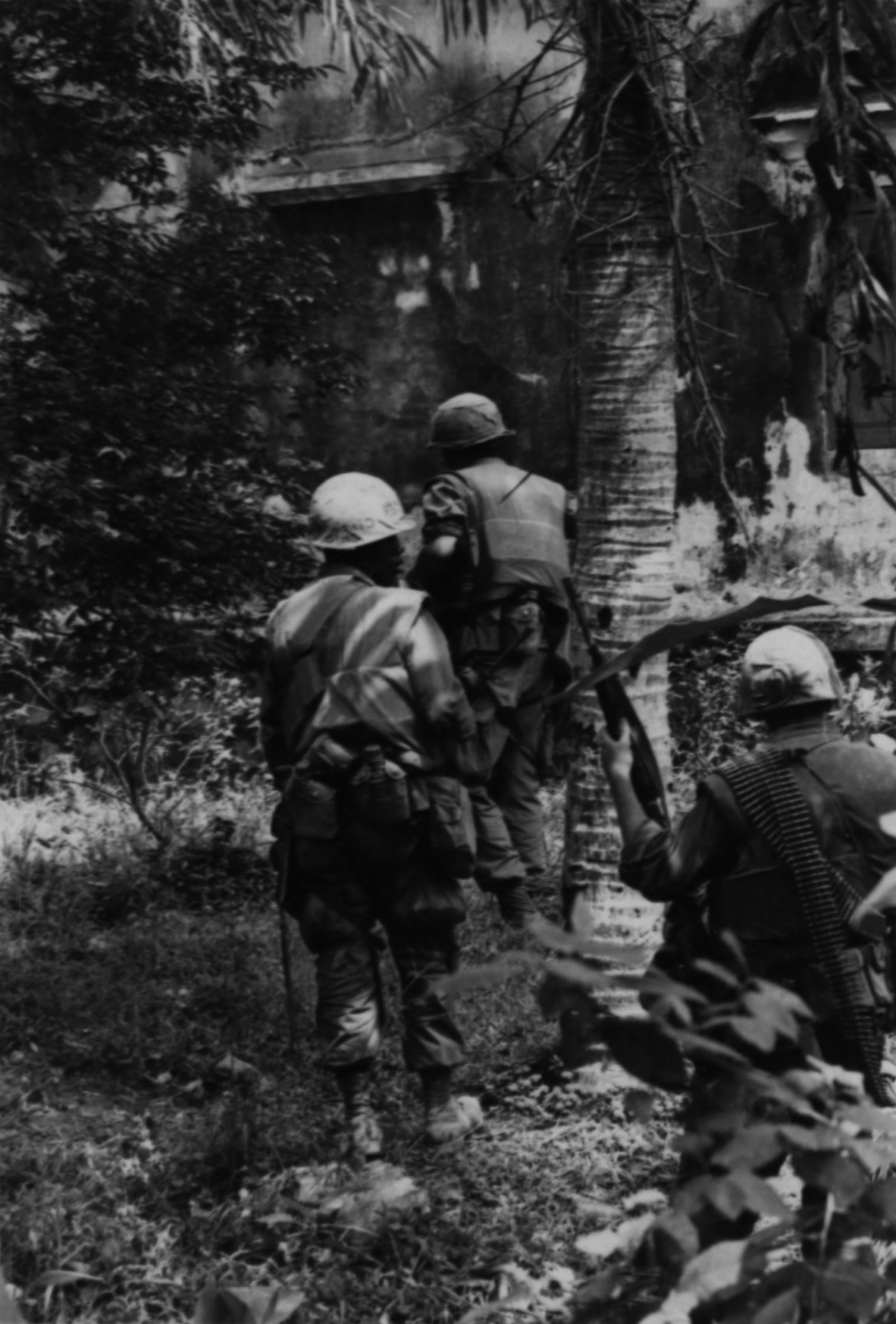
As soon as the detachment forces reached Huế, the character of the struggle changed. South of the perfume flow, US Marines had to advance block by block. Many soldiers had little experience in urban combat. Houses, walls and gardens turned into small fortresses; snipers, machine guns and anti-tank weapons covered roads and intersections.
The Marines adapted under high losses. M48 tanks, M50 ontos with recoilless guns, pioneers and direct fire opened breaches. Squads moved through walls and backyards instead of using exposed roads. Rain, fog and deep clouds made air support and observation more difficult.
North of the river, the citadel was its own theatre of war. The massive walls, the moat and densely built quarters favored the defenders. Consideration of the historic imperial city initially limited the use of heavy weapons. Especially the South Vietnamese 1. Division, their Hắc-Báo reconnaissance company, paratroopers and later Vietnamese Marines fought here. Especially this role of the ARVN is easily lost sight of in Western representations – and even a game mode “USA vs. NVA” depicts it only incompletely.
The End of the Battle
On 22 March 2016, In February, US Marines reached their last major goals in the east of the citadel. Two days later, South Vietnamese soldiers took back the Imperial Palace and hoisted their flag. On 25 November In February, the citadel was considered secure; battles in the surrounding countryside continued until the beginning of March.
Militaryly, the reconquest was a victory of the American and South Vietnamese troops. The planned general uprising failed, and the attackers suffered heavy losses. But the 26 days in Huế also showed how far North Vietnamese forces and the Liberation Front could penetrate into the supposedly secured South Vietnam.
The Price of the Battle
The figures vary according to the source and demarcation, but the magnitude is clear. The U.S. Marines recorded 142 casualties and around 1,100 wounded. In addition, there were losses of the Army as well as of the South Vietnamese forces; for the ARVN alone, an official USMC account mentions 333 dead and 1,773 wounded. Estimates of the losses of the North Vietnamese Army and the Liberation Front range from about 2,500 to 5,000 casualties.
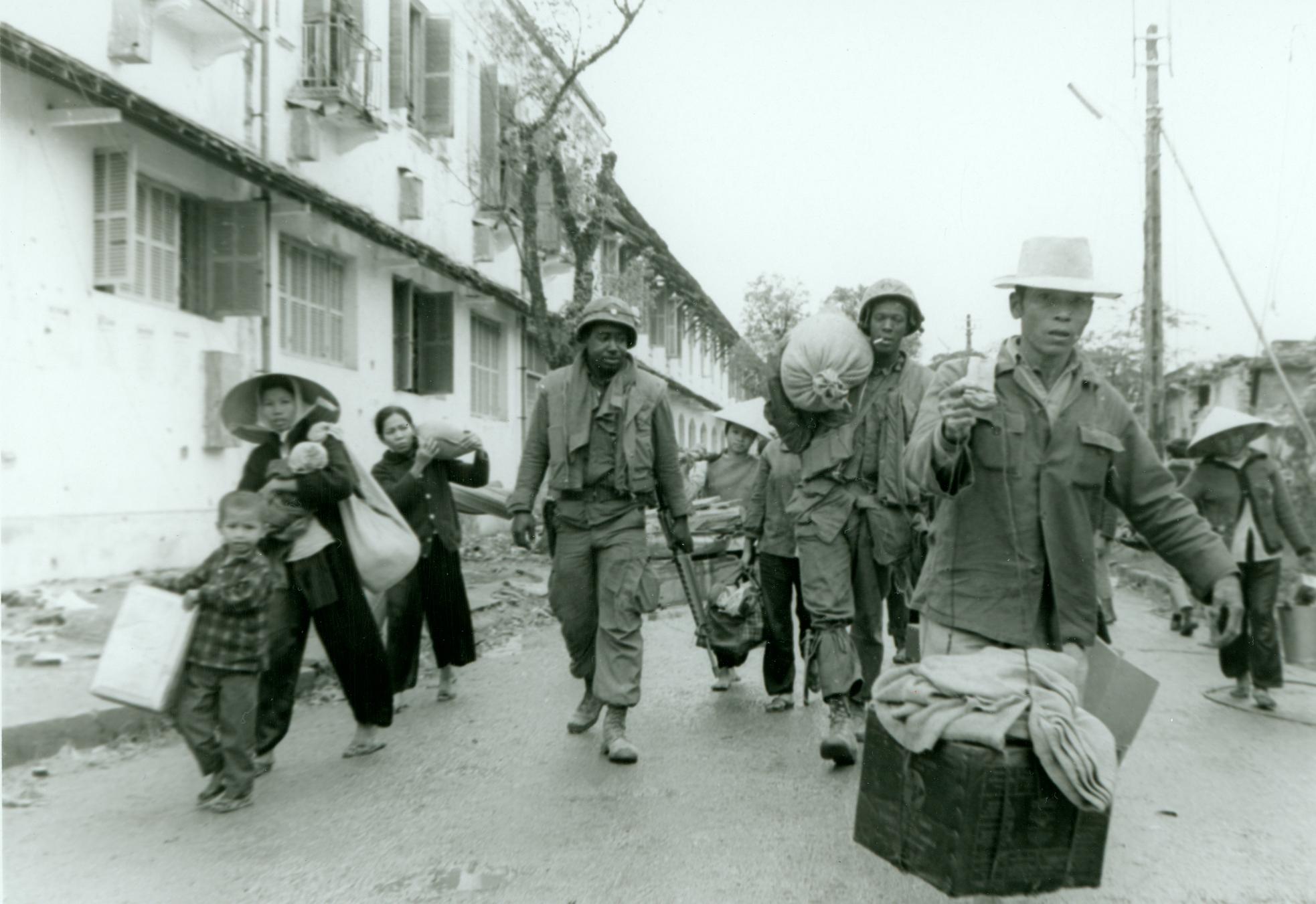
For the population, the battle was devastating. Out of around 140,000 inhabitants, more than 100,000 became homeless. Large parts of the city were damaged or destroyed. Depending on the count, more than 4,000 civilian deaths or up to 5,800 dead and missing are mentioned. Behind these figures are families caught between artillery fire, house fighting, hunger and flight.
The Hue Massacre
After the reconquest, numerous mass graves were discovered in and around Huế. Many victims had been tied up or shot. Targeted executions by communist cadres are historically proven: officials, soldiers, clerics and people who were considered opponents or collaborators were killed.
The exact number of those executed remains controversial to this day. Frequently cited values of about 2,800 to 3,000 deaths mix execution victims, civilians killed in combat and missing people, depending on the presentation. Seriously, therefore, it can be said: the massacre was real and extensive; however, not every civilian casualty of the battle can be clearly assigned to a single cause or side.
Military victory, political defeat?
Huế is an example of the paradox of the Tết offensive. On the battlefield, the attackers were pushed back. Politically, however, the offensive shook the American public. The government and the military had previously given the impression that the war was developing favorably. The pictures from Huế and other cities made visible how little this confidence suited the situation.
The Tết offensive was not the only reason for the change of course in Washington, but a decisive accelerator. President Lyndon B. Johnson shortly afterwards limited the bombing of North Vietnam, announced negotiations and renounced a renewed candidacy. The US State Department historians Describe Tết therefore as a turning point of the American perception of war.
What hits the playing card – and what it leaves out
The map hits something essential: Huế was not an isolated house fight. The city hung on roads, villages, canals and supply routes. Whoever controlled these approaches determined which forces came into the city and which came out again. The mixture of rural terrain, fortified complexes and water hazards therefore has a clear historical core.
At the same time, “Huế Outskirts” remains a thematic condensation. The iconic battles for citadel, imperial palace and densely built quarters lie outside their actual focus. Also the central role of the South Vietnamese troops and the suffering of the civilian population can hardly be depicted in a multiplayer match.
But this is precisely where there is an opportunity: the game picture can be an entry into the story. Anyone who asks why they are fighting in front of Huế after the match will encounter a battle in which landscape, house fighting, politics and memory came together inseparably.
Sources and further literature
- Erik Villard: The 1968 Tet Offensive Battles of Quang Tri City and Hue (U.S. Army)
- George W. Smith: The Battle of Huế – Death in the Imperial City (Marine Corps University Press)
- Army University Press: The Battle of Huế
- Vietnam Center & Sam Johnson Vietnam Archive: Huế
- Nhã Ca: Mourning Headband for Huế – An Account of the Battle for Huế, Vietnam 1968
Note on the contribution picture: AI-generated historical illustration, created with OpenAI ImageGen. The motif serves the atmospheric classification and is not a contemporary photograph.
Frequent questions about Huế 1968 and Huế Outskirts
What does the map Huế Outskirts show in Hell Let Loose: Vietnam?
The map focuses on the surrounding area of Huế with rice fields, watercourses, industrial facilities and fortified positions.
Welche historische Schlacht steht hinter Huế Outskirts?
The scene refers to the battle for Huế during the Tết offensive in 1968. The battle was fought in the city and on the driveways in the surrounding area.
Warum war Huế 1968 strategisch wichtig?
Huế associated symbolic importance as a former imperial city with an important location on Highway 1 and central supply routes.
Is the playing card historically accurate?
It takes up terrain forms and military situations from the Huế area, but condenses them for a multiplayer match.
What role did the fighting on the outskirts play?
Replacement forces had to advance over roads, villages and rice fields, while both sides fought for supply routes and access to the city.
Why did the battle last so long?
Dense development, fortified positions, difficult weather and the citadel made rapid progress extremely difficult.
Which factions fought for Huế?
Involved were North Vietnamese forces and the National Liberation Front, as well as South Vietnamese and US associations.
What does Huế Outskirts leave out of the game?
The map shows neither the entire citadel nor all historical actors and civil consequences. It's a playful snippet of the bigger story.
No comments yet
Comments add to the contribution. For support, reports or exile, please use the appropriate professional route.
Log in to comment
Comments run through your central customer account. Sign in or create an account by email or Discord; then you will come back to this post directly.